Price
$100-$200
Price
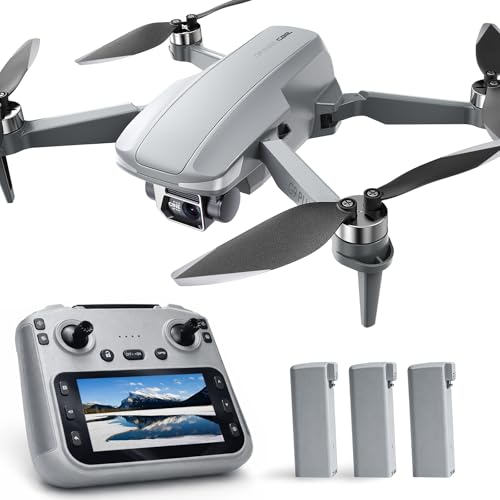
The HS175D makes the most sense for a first-time drone buyer who wants GPS safety, a folding body, and a camera that can handle family outings or roofline checks without jumping straight to a pricier creator rig. Its appeal is the mix of 4K video, auto return, and two batteries in a lightweight package, but the trade-off is just as clear: this is a beginner-friendly flying camera, not a stabilized cinematic drone.
If you want an easy entry into GPS drone flying with enough camera quality to feel useful, this is a sensible route. If you need smoother pro-level video, stronger reliability headroom, or a more polished camera system, the HS175D is better treated as a starter drone than a long-term upgrade path.
| Video capture resolution | 4K |
|---|---|
| Color | Black |
| Connectivity | Wi-Fi |
| Item weight | 7.58 oz |
| Age range | 14+ |
| Included components | Drone, transmitter, two charging cables, battery, propeller, screwdriver, instructions |
The HS175D leans hard into assisted flying with GPS auto return, altitude hold, headless mode, and one-key takeoff and landing. That combination matters because it reduces the number of mistakes a new pilot can make before the drone gets away from them.
The trade-off is that this is still a beginner system, not a forgiving premium camera platform. If you want a first drone that helps you learn the basics and gets you home when the battery runs low, this setup is right on target.
The 4K camera, 110° wide-angle lens, and 90° adjustable angle give the HS175D enough framing flexibility for travel clips, roof inspections, and family shots.
What you notice in use is convenience more than cinematic polish. The camera can capture a lot of scene, but the footage route is still limited by the class of drone, so buyers chasing smoother motion or more refined stabilization should look higher up the ladder.
The folding frame and included carrying case make the HS175D easier to pack than a full-size drone, and the box includes two batteries, spare propellers, a screwdriver, and charging cables.
That matters because the whole kit is aimed at getting a beginner in the air quickly and keeping them there long enough to learn. It is a practical bundle, though the compact build also signals that this is a lightweight drone meant for short outings, not a heavy-duty field machine.
On a first flight in an open yard, the HS175D reads like a drone built to lower the stress of learning. GPS return-to-home, altitude hold, headless mode, and one-key takeoff and landing give a new pilot enough structure to focus on steering instead of fighting the aircraft. The practical payoff is simple control confidence; the downside is that the drone is still light enough that wind, distance, and the pilot’s timing matter more than the marketing copy suggests.
For casual photo work, the 4K camera and 110° wide-angle lens make the drone useful for roofs, property edges, and outdoor scenes where getting the whole frame matters more than absolute image polish. The 90° adjustable camera angle helps with top-down shots and quick follow passes, which is a real convenience when you do not want to keep repositioning the aircraft. The limitation is that this is still a compact camera system, so the footage route is about usefulness and convenience first, not the kind of smoothness you would expect from a higher-end gimbal setup.
Battery planning is where the HS175D’s value case either holds together or starts to thin out. Two batteries and a claimed 46-minute total flight window make it easier to practice without constant recharging, and that matters for beginners who need repeated takeoffs more than one long session. But the real-world pattern in buyer feedback centers on roughly 20-minute stretches per battery, which is enough for learning and short filming runs, not for an all-afternoon outing. That makes the drone a better fit for short, planned flights than for anyone who wants to stay airborne for long stretches.
Community
The pattern is consistent: people who want an affordable first drone, easy setup, and useful GPS features tend to come away happy, while the main disappointments cluster around battery life, video smoothness, and occasional connection or control frustration. The useful lesson is that this drone is strongest when you treat it as a learning and short-session camera tool, not as a polished aerial video platform.
This drone performs exactly as advertised. Nothing less, nothing more.
In my opinion, this is an excellent drone for beginners, and the picture quality and stability are really impressive.
The handling is exceptionally well, fast, and lots of fun, but the camera gimbal is a bit shaky when panning.
My original drone will not connect to my phone for camera operation anymore, even though the controls still work.
| Attribute | Holy Stone HS175D Current | DJI Neo | CHUBORY G9 | Dazlen P100 |
|---|---|---|---|---|
| Price | $149.99 | $139.00 | $139.99 | $176.69 |
| Video capture resolution | 4K | 4K | 3.7 MP | 2K |
| Item weight | 7.58 oz | 135 g | Under 249 g | - |
| Connectivity | Wi-Fi | Bluetooth, Wi-Fi | - | - |
| Included components | Drone, transmitter, two charging cables, battery, propeller, screwdriver, instructions | - | No charger included | - |
| Editorial score | 70/100 | 67/100 | 69/100 | 65/100 |
Against the DJI Neo, the HS175D is the more traditional beginner GPS drone route. The Neo brings a lighter 135 g class and a more modern travel profile, while the HS175D leans on a bigger starter bundle, return-to-home behavior, and a familiar folding layout. Choose the HS175D if you want a straightforward learning drone with two batteries and don’t need the most compact sub-250g travel-first setup.
Against the Dazlen P100, the HS175D is the more camera-forward beginner pick. The P100’s 2K video and EIS keep it in a simpler imaging lane, while the HS175D gives you 4K capture, GPS safety features, and more obvious all-around starter value. Pick the P100 if you care more about simpler stabilization and a leaner camera spec; pick the HS175D if you want the stronger feature mix for learning and casual filming.
Compare with
Add a second model to activate the direct comparison.
No products match that filter combination.
The HS175D is a strong buy for someone who wants a beginner drone with real safety help, a useful 4K camera, and a bundle that makes first flights less intimidating. It is especially appealing if you value GPS return-to-home, folding storage, and two batteries more than cinematic smoothness. If the current offer is close to the usual midrange starter-drone lane, it makes sense as a practical first step into aerial flying. If your priority is smoother video, longer battery confidence, or a more refined camera platform, this is the place to skip up a tier. The battery behavior and occasional connection complaints matter most for buyers who plan to fly often or rely on the drone for dependable camera use; for everyone else, the HS175D stays a sensible beginner choice with clear limits.
It includes GPS auto return, altitude hold, headless mode, and one-key takeoff and landing to make early flights easier.
Yes. The 4K camera, 110° wide-angle lens, and 90° adjustable angle make it useful for travel clips, roof checks, and family shots.
Review updated on