Price
$100-$200
Price
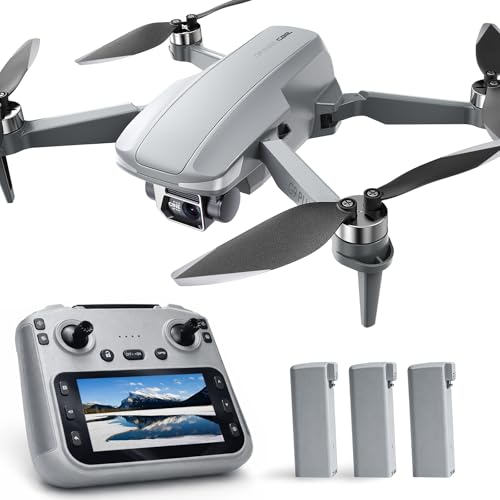
If you want a beginner-friendly GPS drone that gives you a screen on the controller instead of forcing a phone into the setup, the Dazlen P100 is aimed at exactly that lane. The built-in 4.5-inch LCD, GPS return-to-home, brushless motors, and foldable body make it a practical travel-and-learn option for casual aerial video, but the real trade-off is that it reads more like a smart starter drone than a serious creator rig.
I would point this toward first-time flyers, family-trip users, and casual outdoor shooters who care more about easy control and safety features than cinematic polish. Skip it if you need pro-level footage or a clearly defined creator camera route, because the camera story is centered on 2K capture and electronic stabilization rather than a mechanical gimbal or advanced imaging controls.
| Video resolution | 2K |
|---|---|
| Photo resolution | 2K still capture |
| Gimbal type | Electronic Image Stabilization (EIS) |
| Maximum flight time | Up to 40 minutes |
| Controller | 4.5-inch LCD screen remote controller |
| Included accessories | GPS drone, carrying bag, 8 propellers, 4 protective guards, 2 Type-C charging cables |
The 4.5-inch LCD built into the remote is the feature that changes the day-to-day experience most. It removes phone mounting from the core flight routine, which is a real comfort for beginners who want fewer moving parts before takeoff.
That also makes the P100 easier to hand to someone else for a quick flight, because the control and live view stay in one place. The trade-off is simple: convenience goes up, but the camera system remains a casual one, so this is about smoother flying more than advanced imaging.
The drone’s 2K camera with EIS gives it enough headroom for everyday aerial clips, social posts, and family footage. The 90-degree adjustable lens adds useful framing flexibility, especially when you want to tilt down without changing the drone’s position.
This is the part that keeps the P100 in the beginner-camera lane instead of the creator lane. It can capture clean casual video, but the lack of a mechanical gimbal means buyers chasing consistently polished motion should treat it as a step-up starter, not a film-first tool.
GPS return-to-home, follow-me, waypoint fly, circle fly, gesture selfie, and two speed modes make the P100 feel designed for learning without feeling stranded. The included propeller guards and the brushless motor also support that beginner-first role by making the drone more forgiving in ordinary backyard and park use.
That combination matters because it reduces the number of ways a first drone can become frustrating. The practical downside is that the feature set is broad enough to be useful but not deep enough to replace a more advanced camera drone if your main goal is repeatable, polished aerial production.
For a first flight in the yard or at a park, the P100’s biggest advantage is that the controller already carries the live view, so the setup stays tidy and the learning curve stays focused on sticks and GPS behavior instead of phone pairing. That matters because beginner drones often lose momentum to app friction, and this one is clearly built to avoid that. The flip side is that the camera route is still a casual one, so the appeal is confidence and convenience first, not a substitute for a more serious aerial camera system.
On a short walk or family outing, the foldable body and carrying bag make this feel easy to bring along, and the 210 g weight keeps the whole package in a compact travel lane. The included two batteries also change the experience in a real way, because the advertised 40-minute total runtime is enough to keep the drone from feeling like a one-pack novelty. Even so, that runtime is a shared-battery total rather than a single long stretch, so the practical rhythm is fly, swap, and keep moving rather than treat it like an all-afternoon platform.
The safety stack is the other reason this model makes sense for newer pilots. GPS auto return, low-battery return, signal-loss return, follow-me, waypoint fly, circle fly, and prop guards all push it toward forgiving outdoor use, and the brushless motor should help it feel calmer than toy-grade drones in light wind. The limitation is that the camera setup is still anchored by 2K capture and EIS, so if your purchase decision depends on truly polished motion footage, this is more of an easy-entry drone with useful smart modes than a content-creator centerpiece.
Community
The recurring pattern is easy to read: people are happiest when the P100 feels simple, stable, and less phone-dependent than expected, and they cool off when they compare the camera to more ambitious aerial systems. The practical lesson is that this drone wins on confidence and convenience, not on pretending to be a premium imaging platform.
I’ve been pleasantly surprised with this GPS drone so far. Setup was straightforward, and the built-in screen controller is honestly one of the best features since I didn’t have to rely on my phone or deal with app.
I loved this GPS drone with a 2K FPV camera. The image quality is quite good for capturing photos and videos from the air, and the GPS function greatly helps maintain stability during flight.
Blue More fun than I expected. I bought this as my first drone and after a few weeks of flying it indoors and outside, setup is dead simple and the flight has been genuinely impressive.
This drone is great for new drone users wanting to see what flying a drone is all about. The folding design and the remote control with video screen make it easy to get into GPS mode and start flying.
| Attribute | Dazlen P100 Current | Holy Stone HS175D | NAFYRE N11 PRO | CHUBORY G9 |
|---|---|---|---|---|
| Price | $176.69 | $149.99 | Out of stock | $139.99 |
| Video resolution | 2K | 4K | 2048 x 1080 | 3.7 MP |
| Max flight time | Up to 40 minutes | - | Up to 90 minutes | Up to 90 minutes |
| Editorial score | 65/100 | 70/100 | 70/100 | 69/100 |
Compared with a typical DJI Mini route, the P100 is the more approachable choice if you want screen-based control, GPS safety features, and a lower-pressure first drone experience. The DJI-style alternative makes more sense when the buyer wants a stronger camera-first identity and is willing to pay for a more established imaging platform.
Against a basic toy drone, this Dazlen feels much more complete because the brushless motor, GPS return-to-home, follow-me, foldable body, and included guards give it a real beginner-camera identity. If the goal is just to learn the sticks cheaply, a simpler toy can do that job; if the goal is to learn while also getting usable aerial clips and safer recovery behavior, the P100 is the better lane.
Compare with
Add a second model to activate the direct comparison.
No products match that filter combination.
The Dazlen P100 makes the most sense for a buyer who wants a friendly GPS drone with a built-in screen, useful return-to-home behavior, and enough camera capability for casual 2K clips. It is a strong value route when convenience, beginner confidence, and portability matter more than chasing a polished creator camera, and the current offer is worth watching if that is the lane you want. If your main priority is cinematic footage, this is the point where the P100 stops being the obvious pick. The 2K camera with EIS, the lack of a mechanical gimbal, and the split battery runtime keep it in the starter-drone class, so buyers who need more serious imaging should move to a more creator-focused alternative instead of stretching this one beyond its strengths.
No, the 4.5-inch screen remote handles live view and core control, which keeps the setup simpler for beginners.
Yes, the foldable body, carrying bag, and 210 g weight make it easy to pack for trips and casual outdoor use.
Review published on