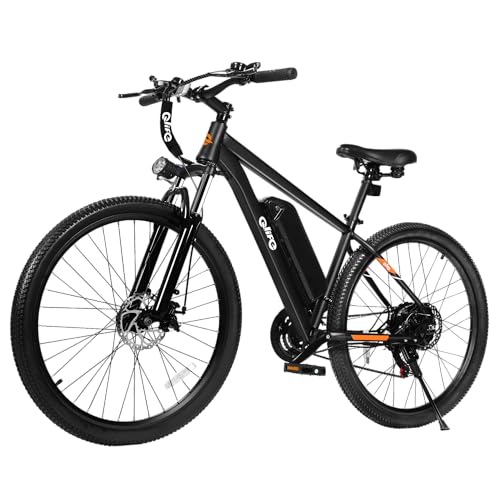
Review E-Bikes URLIFE

URLIFE E20 E-Bikes - Review and opinions

Price currently unavailable
See on Amazon
Price and availability checked on
65 /100 Overall

Score

Customer reviews 80/100

Is it worth it?

If you want a compact fat-tire e-bike that can handle neighborhood rides, errands, and rougher pavement without looking like a stripped-down toy, the URLIFE E20 lands in a useful middle ground. The 20-inch fat tires, front suspension, 7-speed drivetrain, and rear rack make it more practical than a bare-bones commuter, while the Black finish and adjustable seat keep the fit broad enough for adults and teens. The trade-off is that the strongest claims lean hard on speed and range, so this is best for buyers who value a sturdy all-around ride more than a fully transparent long-distance setup.

I’d put this in the lane for riders who want easy daily use, stable handling, and a low entry price, not for someone who needs a clearly documented premium battery system or a lighter, more portable bike. The E20 makes sense if your route mixes city streets, short commutes, and occasional sand or rough paths; it is a weaker fit if you care most about ultra-clean assembly, folding storage, or the kind of confidence that comes from a more fully spelled-out ownership package.

Motor power 48V hub-drive motor
Battery capacity 48V 13Ah
Claimed range up to 80 miles
Maximum assist speed up to 28 MPH
Brake type disc brakes
Wheel size 20 inches

Stable fat-tire ride

The 20-inch fat tires and front suspension are the part of this bike you notice first on rough pavement, sand, or mixed neighborhood surfaces. They make the bike feel more secure and less twitchy than a slim commuter, which is a real advantage if your route is not perfectly smooth.

That stability also changes the type of buyer this fits. It is better for riders who want confidence and comfort than for anyone chasing a light, nimble machine. The downside is simple enough: the same planted feel that helps on rough ground adds bulk and makes storage less convenient.
Flexible fit for more than one rider

The adjustable seat and adult-plus-teen positioning make the E20 easier to place in a household than a single-size bike. It can work for a shorter rider and still remain usable for a taller one, which is why it shows up as a family-friendly option rather than a one-person specialty bike.

That matters because fit is often the hidden cost of buying a budget e-bike. When the saddle range and riding position are forgiving, the bike is easier to share and easier to live with. The trade-off is that it is still a full-size electric bike, so flexibility in fit does not remove the physical footprint.

Utility and road-use basics

The rear rack, dual lights, digital display, and disc brakes give the E20 the core pieces needed for everyday riding. Together, they make the bike more useful for commuting and errands than a stripped-down model that only promises speed.

This is where the value case becomes clearer. You are not just paying for assist; you are getting a setup that can carry bags, stay visible after dark, and give you basic control confidence. The limitation is that the package feels practical rather than polished, so buyers expecting a more refined premium build will notice the budget-first character.

Use evaluation

For a short commute or a grocery run, the E20’s shape matters as much as the motor. The 20-inch fat tires and front fork suspension give it a planted, forgiving feel that suits broken pavement, curb cuts, and the kind of mixed city riding where a narrow-tire bike starts to feel nervous. That stability is the real draw here, and it makes the bike easier to imagine using for everyday errands than for polished-road purity. The trade-off is obvious too: this is a chunky ride, so the convenience comes from steadiness and utility, not from being easy to lift or tuck away.

On a family ride or a first e-bike setup, the adjustable seat and 7-speed drivetrain make the fit more flexible than the price suggests. One rider can sit upright and relaxed, while a shorter rider still has room to get comfortable, which is exactly why the bike reads as usable for adults and teens rather than locked into one body type. The motor claim of 28 MPH and the hill-climbing pitch give it a more energetic personality than a basic cruiser, but that also sets expectations high. For buyers who want a calm, predictable assist rather than a hot-rod feel, the speed story matters less than the stable chassis and easy fit.

Battery confidence is the other big decision point. The advertised 80-mile range is ambitious, while the visible riding reports cluster around shorter real-world outings and multi-day commuting without constant charging. That combination makes the bike look strongest for routine trips, school runs, and weekend rides where you can keep a charger nearby, not for riders planning to stretch every outing to the limit. In practical terms, it is a good match for someone who wants fewer charging interruptions and can live with range claims that sit above the most conservative user experience.

Pros

  • Fat tires and front suspension add stability on rougher streets.
  • Adjustable fit works for a wider range of riders.
  • Rear rack, lights, and disc brakes make it more practical for errands and commuting.
  • Low price relative to the feature set gives it a strong entry-level value case.

Cons

  • Assembly can be awkward, and the included tools may not make final tightening feel effortless.
  • The headlight has been called out as not especially bright.
  • The bike is bulky, so storage and lifting are less convenient than on a lighter commuter.
  • Range and speed claims are ambitious enough that buyers focused on conservative long-distance planning may want a more clearly documented option.

Community

User reviews

The pattern is straightforward: riders respond to the comfortable ride, easy fit, and strong value, while the main frustration comes from assembly friction and a few durability worries. The useful lesson is that this bike makes the most sense when you want a sturdy, affordable all-rounder and are comfortable with a setup that may take more patience than the price suggests.

Michelle

Look stylish and cool. Better than expected. Smooth and very comfortable to ride. Reasonable price. Easy to assembly. Good quality.

John

Love the bike, I am 4 ft 11 and 62 years old and the bike fits me perfectly. No issues thus far, rode it multiple times already up to 5 miles each time.

Nighthawk

It was extremely awkward to assemble and the manual directions were confusing on some assembly processes and parts.

Daniel

It is very fast, the acceleration is great, and the headlight could be brighter. It is easy to set up for one person and feels sturdy and powerful.

Comparison

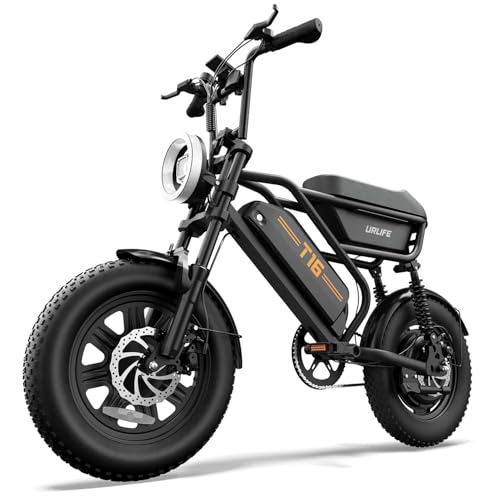
Attribute URLIFE E20 Current URLIFE T16 TS TST GRP LLC R004 TS TST 1500W Retro E Bike
Battery capacity 48V 13Ah 48V 13Ah 48V 15Ah 48V 15Ah removable
Motor power 48V hub-drive motor 1000W 750W with 1500W peak 1500W peak
Claimed range up to 80 miles Up to 40 to 60 miles in pedal-assist mode up to 60 miles in PAS mode up to 60 miles in PAS mode and 40 miles in throttle mode
Maximum assist speed up to 28 MPH Up to 28 MPH 28 MPH -
Brake type disc brakes Dual mechanical disc brakes Mechanical disc brakes disc
Wheel size 20 inches - 20 inches 20 inches
Editorial score 65/100 69/100 69/100 66/100

Against the GELEISEN PM-09, the URLIFE E20 is the better pick if you want a fatter-tire, more utility-minded ride with rear rack support and a more relaxed all-terrain feel. The PM-09 is the cleaner choice if you want a simpler commuter profile with a smaller 36V 10.4Ah battery, 20 MPH assist, and a more straightforward city-bike identity. That makes the decision mostly about route and posture: practical mixed-surface comfort here, more restrained urban commuting there.

Compared with the VEBLUE 1500W Folding Electric Bike, the E20 gives up folding portability and the bigger peak-power headline, but it also avoids turning the purchase into a storage-first decision. The VEBLUE route fits riders who need compact transport and a stronger power story; the URLIFE route fits riders who care more about stability, rack utility, and a steadier everyday ride. If apartment storage or car-trunk transport is the priority, the folding bike wins. If you want a more planted bike for errands and casual riding, the E20 is the easier fit.

Compare with Compare this model This product stays fixed; add a recommended alternative or search another model in the category.

Compare with

Add a second model to activate the direct comparison.

Is the URLIFE E20 electric bike worth it?

The URLIFE E20 is a solid buy for riders who want an affordable fat-tire e-bike with real everyday usefulness: stable handling, adjustable fit, disc brakes, lights, a rear rack, and enough assist to make short commutes and errands feel easy. If you want an entry-level electric bike that looks sturdy, rides comfortably, and does not force you into a narrow rider profile, this is the kind of package that makes sense at the current offer. The clearest skip case is for buyers who need compact storage, a lighter carry, or a more polished assembly experience. The bike’s bulk and the mixed signals around range and setup are the main reservations, and they matter most for riders who want long-distance certainty or apartment-friendly portability. For everyone else, the E20 is better judged as a practical value e-bike than as a spec-chasing standout.

See the best price on Amazon Check for today's deals. Free shipping with Prime.

FAQ

Is this better for commuting or for trail riding?

It is more convincing as a commuter-plus-utility bike with some rough-surface comfort than as a true trail machine.

Does it come ready for easy daily use?

It arrives mostly pre-assembled and includes the basics for riding, but the setup can still take patience, especially around handlebar and hardware tightening.

Editorial team

Active Gear Metrics editorial team

The Active Gear Metrics editorial team reviews product specs, prices, availability, visible customer feedback, and buying signals to keep reviews useful and up to date.

Review published on