
Hoverfly G2610 E-Bikes - Review and opinions
Quick verdict
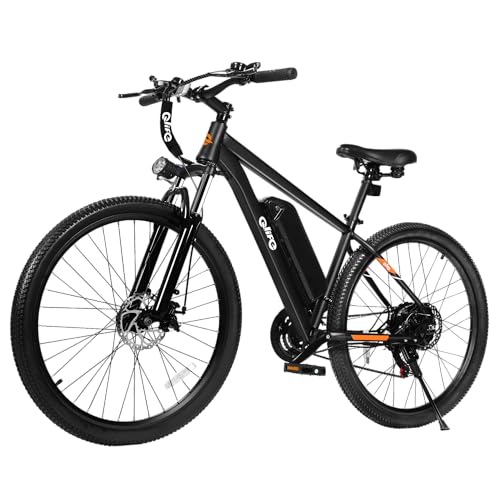
If you want a budget-friendly 26-inch e-bike that can handle commuting, light trail use, and hillier city routes without feeling underpowered, the Hoverfly OUREA makes immediate sense. Its 750W peak motor, 20 MPH top speed, removable battery, and 7-speed drivetrain give it a practical everyday lane, but the real trade-off is comfort and polish rather than raw capability.
This is the kind of e-bike that fits an adult rider who wants simple assist, decent range, and enough road gear to use it daily, not a buyer chasing premium suspension or a plush saddle out of the box. If your priority is a clean commuter with useful lights, fenders, and easy battery handling at a modest price, it lands well; if you need long-ride comfort or the most refined ride quality, there are smoother options.
| Motor power | 750W peak |
|---|---|
| Battery capacity | 374.4Wh |
| Claimed range | 20 to 40 miles |
| Maximum assist speed | 20 MPH |
| Brake type | Disc |
| Wheel size | 26 inches |
Power and pace
The 750W peak motor and 20 MPH top speed give this bike enough punch for stop-and-go commuting, mild hills, and casual trail riding.
That matters because the bike feels like a real assist system rather than a novelty, but it also sets the tone: this is built for useful support, not for chasing a sporty, high-speed ride feel.
Battery routine
The 374.4Wh removable battery and five-hour recharge window make the ownership routine straightforward.
Being able to detach the pack is a real convenience for indoor charging and security, while the 20 to 40 mile claim frames the bike as a practical day-rider instead of a long-range touring machine.
Control and road kit
Disc brakes, front suspension, integrated lights, fenders, and a bell turn the OUREA into a credible daily-use bike rather than a bare-bones electric frame.
In practice, that means better confidence in traffic and less spray on wet pavement, though the setup still leans more toward functional than plush.
Performance and experience
On a weekday commute, the OUREA’s appeal is how quickly it turns a regular ride into something less effortful. The 750W peak motor and 20 MPH cap put it in a useful middle ground for city streets and rolling hills, and the 7-speed setup gives enough range to keep pedaling from feeling one-note. That makes it a strong fit for someone who wants help on the climbs and a sane cruising pace on flatter roads, not a speed-first bike that asks for a more aggressive posture.
For storage and charging, the removable battery is one of the most practical parts of the package. A 374.4Wh pack with a claimed 5-hour recharge keeps the routine simple, and the detachable design matters if the bike lives in an apartment or shared garage. The trade-off is that range depends heavily on how much throttle you use versus pedal assist; the claimed 40-mile figure belongs to the easier end of the ride pattern, while harder use pulls it back toward the lower end of the range.
Ride comfort is where the value story becomes more conditional. Front suspension, disc brakes, fenders, lights, and a bell make it feel ready for daily pavement use, and the 26-inch wheel size keeps it in familiar territory for adult riders. But the seat is a recurring weak point in the feedback, and that matters on longer rides more than the motor does. If your trips are short to moderate, the bike’s practical kit carries it; if you expect 15-plus miles at a stretch, comfort upgrades move from optional to likely.
Pros
- Strong 750W peak assist for hills and stop-start commuting.
- Removable battery makes indoor charging and storage easier.
- Included lights, fenders, and bell improve daily road use.
- Good value positioning for an adult 26-inch e-bike.
Cons
- The stock seat is a common comfort compromise on longer rides.
- The bike is practical, but not the softest choice for rougher terrain.
- Assembly can be straightforward for some riders and frustrating for others, so first setup is not uniformly painless.
Community
User reviews
The pattern here is clear enough for a buyer to use: people keep coming back to the easy assembly, strong assist, and good range for the money, while comfort is the part most often adjusted after the first few rides. The bike wins on practical value and loses points where long-ride softness matters.
I’ve put over 50 miles on my Hoverfly OUREA 26" so far, and I’m genuinely impressed. The 750W peak motor delivers smooth, reliable power and the removable battery is incredibly convenient.
I’ve been riding the Hoverfly OUREA 26" electric bike for more than a week now, and it feels made for daily commutes and relaxed weekend rides.
Great value, hardly any assembly required, and all the tools are included. Brakes and light work perfectly.
I’ve spent over 3 hours trying to get this thing together, and even tightening the bolts feels impossible. The tools they give you won’t even fit.
Comparison
| Attribute | Hoverfly G2610 Current | Funhang EB-C1 | Gotrax Dolphin |
|---|---|---|---|
| Price | Out of stock | $319.99 | $549.99 |
| Battery capacity | 374.4Wh | 48V 374.4Wh removable IPX5 waterproof battery | 280.8Wh removable battery |
| Motor power | 750W peak | 500W with 1000W peak | 350W brushless motor |
| Claimed range | 20 to 40 miles | 25 to 30 miles in pure electric mode and 40 to 50 miles in pedal-assist mode | 15.5 miles in pure electric mode and more than 30 miles in pedal-assist mode |
| Maximum assist speed | 20 MPH | 20 mph | 20 mph |
| Brake type | Disc | 160mm front and rear disc brakes | Dual disc brakes |
| Wheel size | 26 inches | - | 26 inches |
| Editorial score | 69/100 | 67/100 | 65/100 |
Against the Gotrax Dolphin, the Hoverfly gives you a stronger-feeling route for adult commuting and mixed-use riding because it pairs a 750W peak motor with a 26-inch platform and a 7-speed drivetrain. The Dolphin’s 350W motor and smaller-battery, shorter-range profile make it the more modest commuter choice; the Hoverfly is the better pick if you want more hill help and a fuller road kit, while the Gotrax route makes more sense if you want a lighter-duty, simpler ride.
Compared with TS TST GRP LLC R004, the Hoverfly sits in the lower-speed, lower-range, more approachable lane. The R004’s 750W motor with 1500W peak and 28 MPH assist speed pushes it toward riders who want more pace, while the Hoverfly stays friendlier for everyday city use and a lower-cost entry point. If your priority is stronger speed headroom, the TS TST route is more aggressive; if you want a calmer commuter with removable battery convenience and a more modest price point, the Hoverfly is easier to justify.
Compare with Compare this model This product stays fixed; add a recommended alternative or search another model in the category.
Compare with
Add a second model to activate the direct comparison.
Recommended models




No products match that filter combination.
Is the Hoverfly G2610 electric bike worth it?
The Hoverfly OUREA is a sensible buy for riders who want a capable adult e-bike with real hill help, a removable battery, and enough road gear to use it for commuting right away. Its value is strongest when you care about practical range, easy charging, and a complete daily package more than premium comfort, and the current offer makes that balance easier to like. If you want the softest saddle, the smoothest long-ride comfort, or the most aggressive speed ceiling, this is not the cleanest route. The seat and overall ride polish are the main limitations, but for a commuter who wants useful assist, lights, fenders, and a reasonable price, the Hoverfly OUREA is the better-documented choice.
FAQ
Is this better for commuting or trail riding?
It is better for commuting first, with enough assist and front suspension to handle light trail use and rough pavement.
How far will the battery go in real use?
The claimed 20 to 40 miles is the right expectation, with the higher end tied to easier pedal-assist riding and the lower end tied to heavier electric use.
Review published on